If your mornings feel like a loop of “Did you brush your teeth? Where are your shoes? We’re going to be late!”, you’re not alone. A simple back to school routines checklist changed that for our family. The kids stopped waiting for me to tell them every step and started checking off their own lists. In this post you’ll find kid-friendly morning, after-school and bedtime checklists, with one version for younger kids and one for older kids, all ready to print.
When my kids were little, I thought routines were something I had to enforce. What actually worked was giving them a list they could own. Kids like knowing what comes next, and a printed checklist puts them in charge of the steps instead of me.
These lists also work for a mid-year reset. If your routine fell apart around the holidays or after winter break, you can start again today.
Why a Back to School Routines Checklist Works Better Than Reminders
Spoken reminders disappear the second they leave your mouth. A checklist stays on the wall. Your child can look at it as many times as they need without you repeating yourself for the fifth time before 7:30 a.m.
Checklists also build independence. Each checked box is a small win, and it teaches kids to manage a sequence of tasks. That planning and self-management skill shows up later in homework, chores and sports.
The other benefit is fewer arguments. Instead of “Mom said so,” it becomes “What does your list say?” The list sets the expectation, and you get to be the coach instead of the nag.
What the research says about consistency
Pediatric experts often point to predictable daily routines, especially consistent sleep and wake times, as helpful for school-age kids. The American Academy of Pediatrics’ parenting site, HealthyChildren.org, has plenty of guidance on structure, sleep and school readiness if you want to read more.
How to Set Up Back to School Routines for Kids
Don’t just tape up a list the night before school starts and hope for the best. A little setup makes the checklists stick much better.
Start one to two weeks early
Run a few practice mornings before the first day. Treat them like a dress rehearsal: get up at the school-day time, go through the morning checklist, and see where things get stuck. If bedtime has drifted over summer, our 7-day plan to get kids back on a school sleep schedule is a gentle way to shift it back.
Use pictures for non-readers
For preschoolers and kindergartners, add a small drawing or clip-art icon next to each step, like a toothbrush, a shirt or a backpack. My youngest loved coloring her own icons, and she was far more excited to use a list she had decorated.
Post each list where it gets used
Put the morning list on the bedroom door or bathroom mirror, the after-school list by the door where backpacks land, and the bedtime list next to the bed. Kids follow a list they can see while they’re doing the task.
Keep it short
Aim for 6 to 10 steps per routine. Long lists get ignored. If you notice a step your child always does without thinking, take it off and keep the list focused on the steps they skip.
School Morning Routine Checklist
Mornings are where most families feel the pressure. These lists put the steps in a logical order so kids aren’t hunting for shoes after they’re already buckled in the car.
Younger kids (ages 4-7)
- ☐ Wake up and say good morning
- ☐ Go potty and wash hands
- ☐ Get dressed (clothes laid out the night before)
- ☐ Eat breakfast
- ☐ Brush teeth
- ☐ Brush hair
- ☐ Shoes on
- ☐ Grab backpack and lunchbox
- ☐ Jacket on (if it’s cold)
- ☐ Hug and out the door!
Older kids (ages 8-12+)
- ☐ Get up with my own alarm
- ☐ Make my bed
- ☐ Shower or wash face, deodorant
- ☐ Get dressed
- ☐ Eat breakfast and put dishes in the sink or dishwasher
- ☐ Brush teeth and hair
- ☐ Check the planner or school app for today’s schedule (gym clothes? library book?)
- ☐ Pack lunch or grab it from the fridge
- ☐ Backpack, water bottle, phone or device charged
- ☐ Out the door by ____ (write in your time)
Tips that make mornings smoother
Write a “ready by” time on the older-kid list. Older kids respond well to a clear deadline, and it lets them figure out their own pacing.
Make breakfast and lunch decisions the night before. We keep a short rotation of grab-and-go options, and our healthy kids lunch ideas for school make packing go much faster when the kids help choose.
No screens until the checklist is done. This one rule probably saved more of our mornings than anything else.
After School Routine for Kids Checklist
The after-school hours can be the most chaotic part of the day. Kids are tired and hungry, and a lot of them are holding it together until they get home. A predictable after-school routine for kids gives them time to decompress and still gets homework done.
Younger kids (ages 4-7)
- ☐ Shoes off and in the shoe spot
- ☐ Hang up backpack
- ☐ Take out lunchbox and put it on the counter
- ☐ Give Mom or Dad any papers from my folder
- ☐ Wash hands
- ☐ Snack time
- ☐ Quiet play or outside time
- ☐ Reading time (with a grown-up or by myself)
- ☐ Help with one small chore
Older kids (ages 8-12+)
- ☐ Unpack lunchbox and rinse containers
- ☐ Put forms or notes in the family inbox
- ☐ Snack and a short break (set a timer: ____ minutes)
- ☐ Check planner or school portal for assignments
- ☐ Homework at my homework spot
- ☐ Practice or study for upcoming tests
- ☐ Pack backpack for tomorrow
- ☐ Do my daily chore
- ☐ Free time or screen time
Make the after-school routine work for your family
Not every afternoon looks the same. On practice or activity days, we make a shorter “busy day” version with just the essentials: snack, homework, pack backpack. Two versions on the fridge are better than one list that never fits.
The chore step is a great place to build responsibility. If you’re not sure what’s realistic for your child’s age, this guide to chores for kids by age breaks it down by age group.
Some kids need to move their bodies before they can focus on homework. If your child struggles to settle, a quick run outside or one of these activities to improve attention and concentration can help them shift into homework mode.
Bedtime Routine Checklist
A calm evening makes the next morning easier. Bedtime is also where you can do a lot of tomorrow’s prep so mornings aren’t so rushed.
According to sleep guidelines shared by the CDC, school-age kids (6-12) generally need 9 to 12 hours of sleep, and teens need 8 to 10 hours. Count backward from wake-up time to choose a bedtime that fits. If you have concerns about your child’s sleep, talk with your pediatrician.
Younger kids (ages 4-7)
- ☐ Clean up toys
- ☐ Bath or wash up
- ☐ Pajamas on
- ☐ Pick out tomorrow’s clothes
- ☐ Brush teeth
- ☐ Go potty
- ☐ Story time
- ☐ Talk about the best part of my day
- ☐ Lights out by ____
Older kids (ages 8-12+)
- ☐ Shower
- ☐ Lay out clothes for tomorrow (check the weather)
- ☐ Backpack packed and by the door
- ☐ Devices charging outside my bedroom
- ☐ Brush teeth, skincare if I have a routine
- ☐ Quick tidy of my room
- ☐ Read for 15-20 minutes
- ☐ Set my alarm
- ☐ Lights out by ____
Why devices leave the bedroom
Charging phones and tablets outside the bedroom was the hardest rule to start in our house, and it made the biggest difference. Screens in bed make it easy to stay up later than planned. We set up one family charging station in the kitchen, and the grown-ups use it too.
How to Print and Use Your Back to School Routines Checklist
To print, copy the lists for your child’s age into a document, or print this page. Bump the font size up for younger kids, and leave room next to each step for icons or stickers.
Make it reusable
Slip each printed page into a sheet protector or laminate it. Kids can check boxes with a dry-erase marker and wipe it clean each day. Many families clip the lists to a clipboard hanging on a hook, which makes them easy to move.
Customize it together
Sit down with your child and go through the list. Ask what they would add or change. When kids help build the routine, they’re much more likely to follow it. My son added “feed the fish” to his morning list, and he has never forgotten it since.
Pair it with your family systems
Checklists work best alongside a couple of household systems, like a family command center, a landing spot for backpacks and a weekly calendar. If you want to set those up, check out these back-to-school productivity prep systems. They work any time of year, not just in August.
Back to School Routine Tips for Parents
The checklist does the heavy lifting, but a few habits on our end help it stick.
Model the routine yourself
Kids notice what we do. If I’m scrolling my phone while telling them to finish their lists, the message gets lost. When I run through my own morning steps alongside them, it feels like a family routine instead of a rule just for kids.
Praise the process, not perfection
Say things like “You did your whole morning list on your own!” instead of focusing on what they missed. Some families use a simple sticker chart or a small weekly reward for finished lists. Over time, the routine itself becomes the habit and the rewards can fade out.
Expect a dip after a few weeks
The novelty wears off around week three. That’s normal. Freshen up the lists with new colors, let kids add a fun step, or switch the order around if something isn’t working. A dip doesn’t mean the system failed.
Give older kids more ownership
Tweens and teens can write their own checklists or set them up in a notes or reminders app. Your job shifts from manager to consultant. Check in weekly instead of daily, and let natural consequences, like a forgotten gym bag, do some of the teaching.
Do a 10-minute Sunday reset
Every Sunday evening, we look at the week ahead: activities, early dismissals, spirit days. Then we adjust the lists as needed. Ten minutes on Sunday saves a lot of Monday-morning scrambling.
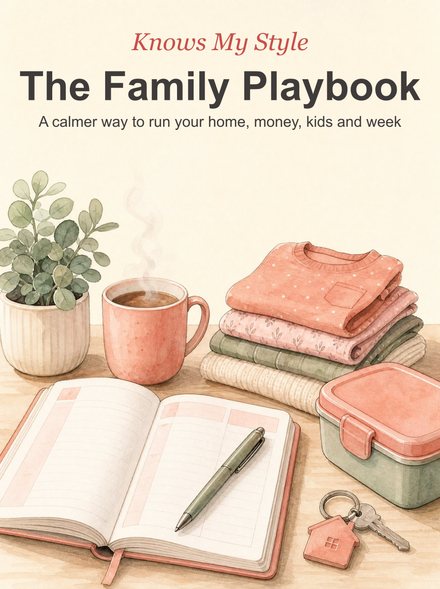
The Family Playbook · PDF ebook
Finally feel on top of your home, money, kids and week
Thirteen chapters that turn advice like this into one simple plan, with a fill-in worksheet at the end of every chapter.
- ✓Sunday Reset: plan the whole week in one sitting
- ✓Kids Who Listen: calm words to use instead of yelling
- ✓Family money plan: see where every dollar goes
Instant PDF download · One-time payment · Read on any device
Frequently Asked Questions
At what age can kids follow a routine checklist on their own?
Many kids can start using a picture-based checklist around age 3 or 4 with some help from a parent. By ages 6 or 7, most can follow a simple written list on their own. Older kids can create and manage their own lists. Go at your child’s pace and add independence gradually as they show they’re ready.
How long does it take for a new school routine to stick?
In our experience, the first week or two takes the most coaching, and things usually feel smoother by the third or fourth week. Every child is different, so stay consistent and patient. Expect setbacks after weekends, holidays and sick days. Just go back to the checklist and restart without making it a big deal.
What should be on a school morning routine checklist?
A good school morning routine checklist covers the basics: waking up, using the bathroom, getting dressed, eating breakfast, brushing teeth and hair, and grabbing the backpack and lunch. Older kids can add making their bed, checking their planner and packing their own lunch. Keep it to about 6 to 10 steps.
Should I reward my kids for completing their checklist?
Small rewards can help kids get started, especially young ones. Stickers, a special weekend activity or extra reading time all work well. The goal is to phase rewards out once the routine becomes a habit. Specific praise for their effort and independence is often just as motivating as any prize.
Final Thoughts
A back to school routines checklist won’t make every morning perfect. It will take a lot of the reminding off your plate and give your kids the satisfaction of doing things themselves. Start with one routine, probably mornings, and add the after-school and bedtime lists once it’s working.
Print the lists that fit your kids’ ages tonight, let them decorate their copies, and do a practice run this week. Then come back and tell us in the comments which list made the biggest difference in your house. And if you’re still getting the school year organized, our back-to-school supply list by grade can help with the rest.